
Cost to Build a Water Well in Africa
Access to clean and reliable drinking water remains a major challenge for many communities across Africa. In rural areas, families may travel long distances to collect water, rely on unsafe sources or experience shortages during dry seasons. Building a community water well can provide a more dependable source and improve everyday living conditions.
But how much does it actually cost to construct one?
The cost of building water wells in Africa generally depends on the type of well, drilling depth, local geology, construction materials, pumping equipment, transportation and water quality requirements. A basic hand-dug well may cost considerably less than a deep drilled borehole or a solar-powered water system.
Understanding these expenses helps donors, charities, NGOs and development organizations make informed decisions when supporting water wells in Africa.
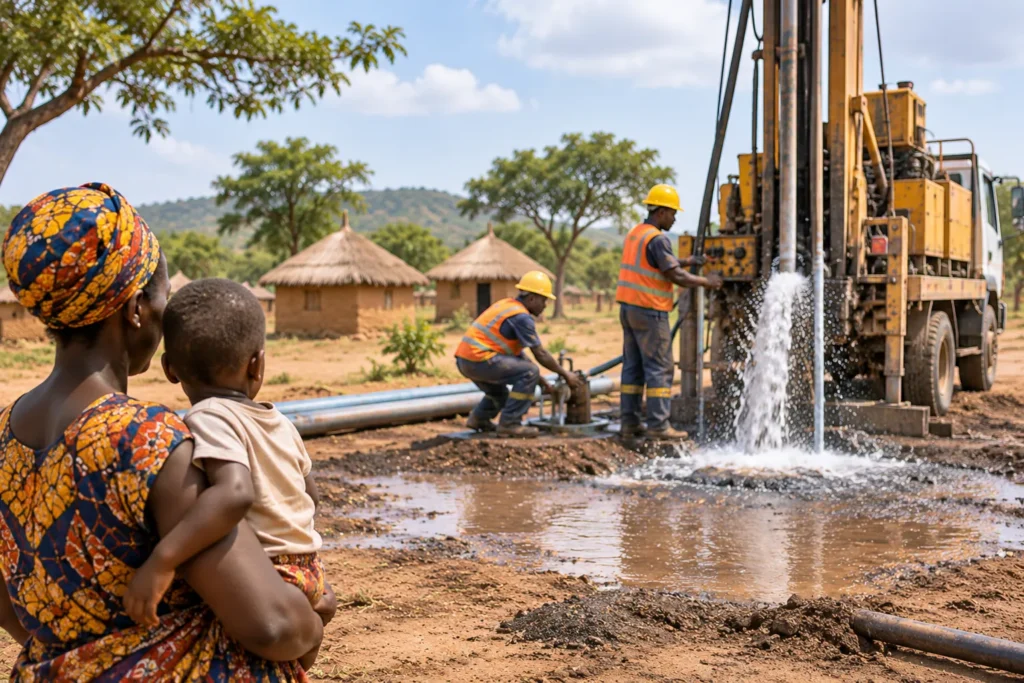
Building a water well in Africa can cost several thousand dollars, with some drilled community boreholes costing around $10,000–$15,000 or more. However, there is no single price that applies to every African country or project.
For example, a published Cameroon construction cost study reported the following reference costs:
- Modern hand-dug well with hand pump: 5 million CFA francs, approximately US$7,463.
- Drilled borehole with hand pump: 8 million CFA francs, approximately US$11,940.
These figures are based on construction cost references used in Cameroon and should not be treated as universal prices for other countries. Actual quotations depend on location, site conditions and project specifications.
A broader African water-sector guide also identifies an average borehole drilling cost of approximately US$10,000–US$15,000 across much of Africa, while emphasizing that costs vary significantly.
What Determines the Cost of Building a Water Well?
Several factors influence the total investment required to develop a reliable community water source.
1. Type of Water Well
The construction method is one of the biggest cost factors.
Hand-Dug Wells
Hand-dug wells are excavated manually or with basic equipment, generally where groundwater is accessible at relatively shallow depths. They may cost less to construct, but require careful protection against contamination and collapse.
Drilled Boreholes
Boreholes are constructed using specialized drilling equipment to reach underground water. They generally require drilling, casing, well development and pumping equipment.
Solar-Powered Water Wells
Solar-powered systems use photovoltaic panels to operate a water pump. They can supply water to elevated storage tanks and distribution points, but require additional investment in panels, pumps, electrical equipment and sometimes pipelines.
For larger community projects, solar-powered systems may provide a practical alternative to conventional pumping arrangements, depending on the location and water demand.
2. Drilling Depth and Ground Conditions
Not every community has groundwater at the same depth.
Some locations have relatively accessible groundwater, while others require deeper drilling. Hard rock formations, unstable soil and difficult geological conditions can increase construction time and equipment requirements.
Before construction begins, a project should include an appropriate site assessment to determine groundwater suitability and likely drilling requirements.
3. Construction Materials and Equipment
A well requires more than simply reaching groundwater.
Depending on the design, construction expenses may include:
- Borehole casing and screens.
- Gravel packing and sealing materials.
- Concrete platforms and drainage.
- Hand pumps or motorized pumps.
- Solar panels and electrical equipment.
- Elevated storage tanks.
- Water distribution pipes and taps.
The materials selected should be suitable for local conditions and the expected community demand.
4. Transportation and Site Accessibility
Moving drilling equipment, construction materials and technical personnel to remote communities can increase project costs.
Difficult road conditions, long travel distances and limited access to construction services may require additional transportation and mobilization expenses.
This is particularly important when planning water well projects in remote rural areas.
5. Water Quality Testing
A completed well should not automatically be assumed to provide safe drinking water.
Water quality testing is necessary to assess potential contamination and determine whether treatment is required. Depending on local conditions, testing may include microbiological and chemical parameters.
A reliable project budget should include appropriate testing and any necessary corrective measures.
Different Types of Water Wells and Their Estimated Costs
The following examples illustrate how construction costs can differ.
|
Water well type |
Cost reference |
Main characteristics |
|
Hand-dug well with hand pump |
About $7,463 in one Cameroon cost reference |
Shallow groundwater access |
|
Drilled borehole with hand pump |
About $11,940 in one Cameroon cost reference |
Mechanically drilled water source |
|
Solar-powered community well |
Varies by project |
Pumping, panels, storage and possible distribution pipes |
These are reference figures, not guaranteed prices or a continent-wide price list. The solar-powered option does not have a single comparable price in the cited Cameroon study.
A separate water-project organization estimates approximately €7,000 for a hand-pump well and €12,000–€15,000 for a solar-powered well. These are its published indicative estimates, not standardized market rates for all African countries.
Why Are Water Wells Important for African Communities?
Reliable drinking water supports health, education, household activities and community development.
Improved Access to Drinking Water
A properly constructed community well can bring a water source closer to households, reducing the need for families to travel long distances to collect water.
Better Hygiene and Health
Reliable access to safe water supports handwashing, food preparation and household hygiene. Water quality protection and regular testing remain essential to ensure that the source is safe.
More Time for Education
In communities where children spend significant time collecting water, a closer and more dependable source may reduce the time burden and create more opportunities for school attendance.
Stronger Community Development
Reliable water access can support household activities, local services and community institutions. It is an important part of building more resilient communities.
How Does the Water Well Construction Process Work?
Building a reliable community water source requires planning, technical assessment and long-term management.
Most projects follow these stages:
Step 1: Community Needs Assessment
The project team consults local residents to understand water needs, identify existing challenges and estimate the number of potential users.
Step 2: Site Selection and Groundwater Assessment
Technical teams assess suitable locations and investigate groundwater conditions before selecting a drilling or excavation site.
Step 3: Drilling and Construction
The well or borehole is constructed using appropriate methods and materials. Casing, screens, sealing and other protective measures are installed according to the project design.
Step 4: Pump Installation and Water Testing
A suitable hand pump, motorized pump or solar-powered system is installed. Water quality and well performance are assessed before the source is put into service.
Step 5: Community Training and Maintenance
Community members receive guidance on responsible use, maintenance and reporting problems. A maintenance arrangement helps protect the investment and keep the water source functioning.
Why Sustainable Water Wells Matter More Than Construction Alone
The success of a water well project should not be measured only by whether construction is completed.
A well that stops functioning because of poor maintenance, damaged equipment or inadequate management cannot provide reliable long-term benefits.
Sustainable water projects should consider:
- Appropriate well design and construction.
- Water quality monitoring.
- Accessible maintenance arrangements.
- Availability of replacement parts.
- Community participation.
- Funding for repairs and ongoing operation.
When these elements are included in the planning process, water wells for Africa can provide more dependable access to drinking water over time.
How Can You Support Water Wells for Africa?
Donations can help charities and development organizations fund essential activities involved in providing community water access.
Depending on the project’s funding structure, contributions may support:
- Groundwater and site assessments.
- Drilling and well construction.
- Pumps and related equipment.
- Water quality testing.
- Storage and distribution infrastructure.
- Community training and maintenance.
Supporting building water wells in Africa is not simply about funding construction. It also means helping communities access a water source that is properly developed, tested and maintained.
Before contributing, donors should understand the project’s location, construction budget, implementation partner, expected beneficiaries and long-term maintenance arrangements.
Conclusion
The cost of building a water well in Africa depends on the construction method, groundwater depth, geology, equipment, transportation and long-term operating requirements.
Published examples from Cameroon indicate that a modern hand-dug well with a hand pump may cost approximately US$7,463, while a drilled borehole with a hand pump may cost approximately US$11,940. These figures demonstrate why project-specific assessment is essential before establishing a fundraising target.
For charities, donors and development organizations, the objective should not simply be to construct more wells. It should be to develop reliable, safe and sustainable water sources that communities can use and maintain.
With appropriate planning, investment and community participation, wells in Africa can help improve access to water and create lasting opportunities for future generations.
FAQs About Water Wells for Africa
The cost varies by country and construction method. A Cameroon cost reference reports approximately US$7,463 for a modern hand-dug well with a hand pump and US$11,940 for a drilled borehole with a hand pump. Actual project quotations may differ.
A hand-dug well may be less expensive than a deep drilled borehole where groundwater is accessible at a suitable depth. However, site conditions, structural safety and contamination risks must be assessed before choosing this option.
A broad African water-sector guide reports average borehole drilling costs of approximately US$10,000–US$15,000 in much of Africa. The final price depends on drilling depth, geology, equipment and construction requirements.
A hand-dug well is excavated manually or using basic equipment, usually to reach relatively shallow groundwater. A borehole is drilled using specialized machinery and can reach deeper underground water sources.
Generally, yes. Solar-powered systems require additional equipment such as solar panels, pumps, electrical components and potentially elevated storage tanks and pipelines. Their suitability depends on water demand, location and available infrastructure.
Construction time varies according to the type of well, drilling depth, geological conditions, equipment availability and site accessibility. Site assessments, procurement and water testing also affect the overall project timeline.
Regular maintenance helps keep pumps, boreholes and associated equipment functioning. Without proper repairs, replacement parts and community management, a completed well may become unusable.
You can support water well projects by contributing to site assessments, drilling, construction, pumping equipment, water quality testing and maintenance. Before donating, review the organization's project budget and implementation plans.